
Got black toenails? Learn why it happens, how to care for it at home, and when to see a doctor.
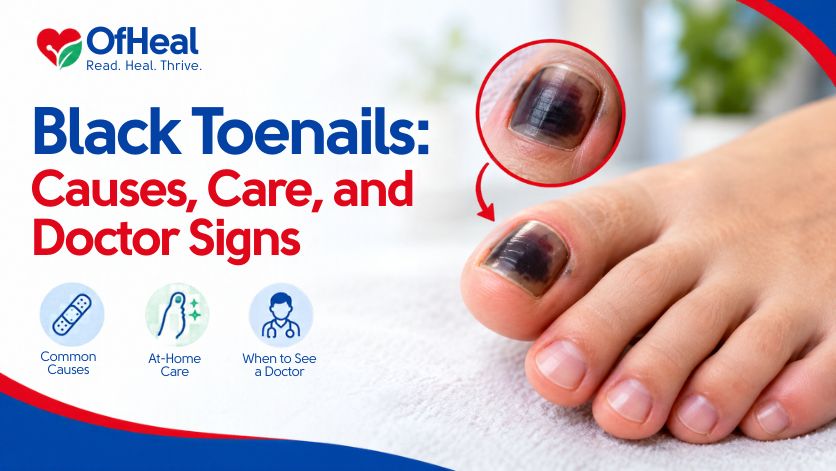
Quick answer: Black toenails are most often caused by trauma, like a dropped object or runner’s toe from tight shoes. Blood pools under the nail and turns it dark. Most black toenails heal on their own in 6 to 12 months as the nail grows out. See a doctor if pain is severe, you see signs of infection, or the dark spot showed up with no injury.
You looked down and saw it. Your toenail turned black. Your first thought might be, “What did I do?”
Black toenails are common. Runners get them. So do people who stub a toe on the stairs. In most cases, it’s just blood trapped under the nail.
But not every black toenail is the same. Some heal fast with simple home care. Others need a doctor’s help. This guide walks you through why black toenails happen, how to care for your toe, and the signs that mean it’s time to get checked out.
Why Did My Toenail Turn Black?
Your toenail can turn black for a few different reasons. Most are harmless. A few need a doctor’s eye.
A Hard Hit or Stubbed Toe
The most common cause is a direct hit. You drop something heavy on your foot. You kick a table leg in the dark. Ouch.
When this happens, small blood vessels under your nail can break. Blood leaks out and gets trapped between the nail and the skin below it. This is called a subungual hematoma. That’s just a fancy way to say “blood under the nail.”
The blood can look red at first. Over time, it turns purple, dark blue, brown, or black. The color depends on how old the bleed is.
Runner’s Toe
You don’t need to drop anything on your foot to get black toenails. Running can do it too.
When you run long distances or run downhill, your toe keeps sliding forward. It jams into the front of your shoe over and over. This small, repeated impact can cause the same kind of bleeding under the nail.
Doctors sometimes call this “runner’s toe.” Hikers get it too, especially on long downhill trails. Tight or short shoes make it worse.
Other Causes of Dark Toenails
Not every black toenail comes from an injury. A few other things can cause dark spots or streaks.
- Fungal infection. This can turn nails yellow, brown, or black. The nail may also get thick or crumbly.
- Normal pigment. Some people get a dark brown or black line running the length of the nail. This is called melanonychia. It’s more common in people with darker skin.
- Certain medicines. Some drugs can cause nail color changes as a side effect.
- Subungual melanoma. This is a rare type of skin cancer that grows under the nail. It’s not common, but it’s worth knowing the warning signs.
How to Tell What Kind of Black Toenail You Have
You don’t need to guess forever. A few clues can help you figure out what’s going on.
Look at the Pattern
A bruise from an injury usually stays in one spot at first. Then it slowly moves toward the tip of the nail as the nail grows. This is a good sign. It means your body is healing and pushing the old, damaged nail out.
A dark streak or spot that does not move, or that spreads toward the skin around your nail, is different. This kind of change deserves a closer look from a doctor.
Check the Color and Shape
Bruises from black toenails tend to have clear, even edges. They often cover most or part of the nail in one solid patch.
Warning signs look different. Watch for a streak that gets wider over time, shows up on just one nail with no clear cause, or spreads color onto the skin next to the nail (doctors call this Hutchinson’s sign). These signs don’t always mean cancer, but they mean it’s time to see a doctor.
How to Care for a Bruised Toenail at Home
Most black toenails from a minor bump heal fine with simple care. Here’s what helps.
Steps for Safe Home Care
- Rest your foot. Skip running or hard workouts for a few days if your toe hurts.
- Ice it. Apply a cold pack for short periods during the first day or two to ease swelling.
- Raise your foot. Keeping your foot up for a bit can also cut down on swelling.
- Wear roomy shoes. Give your toe space. Open-toe sandals can help too while it heals.
- Keep it clean and dry. This lowers your risk of infection.
- Trim the nail short and straight. This stops it from catching on socks or shoes.
- Cover a loose nail. Use a clean bandage if the nail is lifting or might snag on something.
- Take pain relief if needed. Over-the-counter pain medicine can help, following the label directions.
Learn More: How to Keep Your Feet Healthy: 6 Best Daily Tips
What NOT to Do at Home
Please don’t try to drain the blood under your nail yourself. It might be tempting, but it’s risky.
Using a hot paper clip, needle, or pin to poke a hole in your nail can cause a serious infection. It can also hurt the nail bed underneath, which may lead to a nail that grows back oddly shaped.
If a bruise under the nail is causing bad pain, a doctor can safely relieve the pressure. This is called trephination. It just means making a tiny, sterile hole to let the blood drain out. A clinician does this with sterile tools, not something from your junk drawer.
Also, don’t pull off a loose nail yourself. Let it come off on its own, or let a doctor trim it safely.
How Long Does a Black Toenail Take to Grow Out?
Toenails grow slowly. On average, they grow about 1.5 millimeters each month. That’s slower than your fingernails grow.
Because of this slow pace, a black toenail usually takes 6 to 12 months to fully grow out. During this time, the dark area will slowly move toward the tip of your nail.
If the bruise is small, your nail often stays attached the whole time. If the bruise is large, the nail may loosen and fall off before the new one grows in underneath. Either way, this is a normal part of healing from black toenails.
How to Prevent Black Toenails
A few simple habits can lower your chances of getting black toenails again.
- Check your shoe fit. Leave about a thumb’s width of space between your longest toe and the front of the shoe.
- Shop for shoes later in the day. Feet swell as the day goes on, so this gives a truer fit.
- Wear the socks you plan to use. Try on shoes with your running socks, not thin dress socks.
- Go up a half size for running shoes. Your feet need extra room when they swell during exercise.
- Lace your shoes snugly. This stops your foot from sliding forward on downhill stretches.
- Choose moisture-wicking socks. They keep feet drier and reduce friction.
- Trim nails short and straight across. Long nails are more likely to jam into the front of your shoe.
- Replace worn-out shoes. Old shoes lose their cushioning and support over time.
Does a Black Toenail Mean the Nail Will Fall Off?
Not always. It depends on how much blood is trapped under the nail.
- Small bruise: The nail often stays attached. It just grows out slowly with the dark spot moving toward the tip.
- Large bruise: The nail may loosen from the nail bed. It can fall off on its own after a few weeks or months.
- Either way: A new, healthy nail is growing in underneath the whole time.
When Should I Worry About a Dark Spot Under My Nail?
Most dark spots come from a bump or bruise. But a few signs mean you should get it checked.
- The dark spot showed up with no known injury.
- A streak gets wider, darker, or changes shape over time.
- The color spreads onto the skin around the nail or cuticle.
- Only one nail is affected, with no clear cause.
- The nail lifts, splits, or won’t grow out normally.
A quick look can’t always rule out rare causes like melanoma. A doctor may use a close-up tool called dermoscopy, or take a small tissue sample (a biopsy), to be sure. This doesn’t mean something bad is happening. It just means a doctor can check more carefully than you can at home.
When to See a Doctor for a Black Toenail
Most black toenails heal fine without a doctor’s help. But call a doctor or podiatrist if you notice any of these:
- Severe, throbbing pain that doesn’t ease up
- A large dark area covering most of the nail, along with a lot of pain
- A toe that looks crooked, is very swollen, or you can’t move it
- A cut in the skin or nail, or a nail that’s partly ripped off
- Signs of infection, like pus, spreading redness, warmth, red streaks, or a fever
- A dark spot that appeared with no injury at all
- A streak or spot that changes shape, size, or color, or doesn’t move with nail growth
If you have diabetes, poor blood flow, nerve damage, or a weak immune system, get any toe injury checked early. Healing can be slower and problems can be harder to spot.
What Happens at a Podiatrist Visit?
A podiatrist will ask about how the injury happened. They’ll look closely at your nail and toe.
They might order an X-ray if they think a bone could be broken. If the bruise is painful, they can safely relieve the pressure with trephination. They’ll also check for infection and may use dermoscopy or a biopsy if the cause isn’t clear.
A Quick Word on Safety
Most black toenails are nothing serious. A bruise under the nail from a stubbed toe or running is common, and it heals on its own over several months.
Still, a look alone can’t rule out every rare cause. That’s why doctors recommend checking in if something seems off, especially a dark spot with no clear injury.
This article is for general education. It is not a substitute for advice from a qualified doctor or podiatrist. If you’re worried about your toe, please reach out to a healthcare provider.
Take Care of Your Toe Today
Black toenails are usually just bruises that heal with time and a little patience. Rest your foot, give it room to breathe, and watch for warning signs.
If your pain is severe, your toe looks infected, or the dark spot appeared without a clear reason, don’t wait. Book a visit with a doctor or podiatrist and get it checked out. Taking care of black toenails early keeps small problems from turning into bigger ones.
FAQ
Why is my toenail black without an injury?
A black toenail with no known injury can come from a fungal infection, long-term shoe pressure, or natural pigment changes in the nail. It’s best to have a doctor take a look to find the real cause.
Does a black toenail mean it will fall off?
Not always. Small bruises under the nail often stay attached while they grow out. Larger bruises may cause the nail to loosen and fall off before the new nail grows in.
How long does a black toenail take to grow out?
Toenails grow about 1.5 millimeters a month. A black toenail usually takes 6 to 12 months to fully grow out and get replaced by a clear nail.
Is a black toenail dangerous?
Most black toenails are just bruises and are not dangerous. Rarely, a dark spot can point to something more serious, like melanoma, especially if it appears with no injury or changes shape over time.
Can I drain a black toenail at home?
No. Draining a black toenail at home with a needle or hot paper clip can cause infection or damage the nail bed. A doctor can safely relieve pressure using sterile tools if needed.