
Confused about allergy symptoms vs cold? Learn the key signs, timing, and treatments to tell them apart and feel better fast.
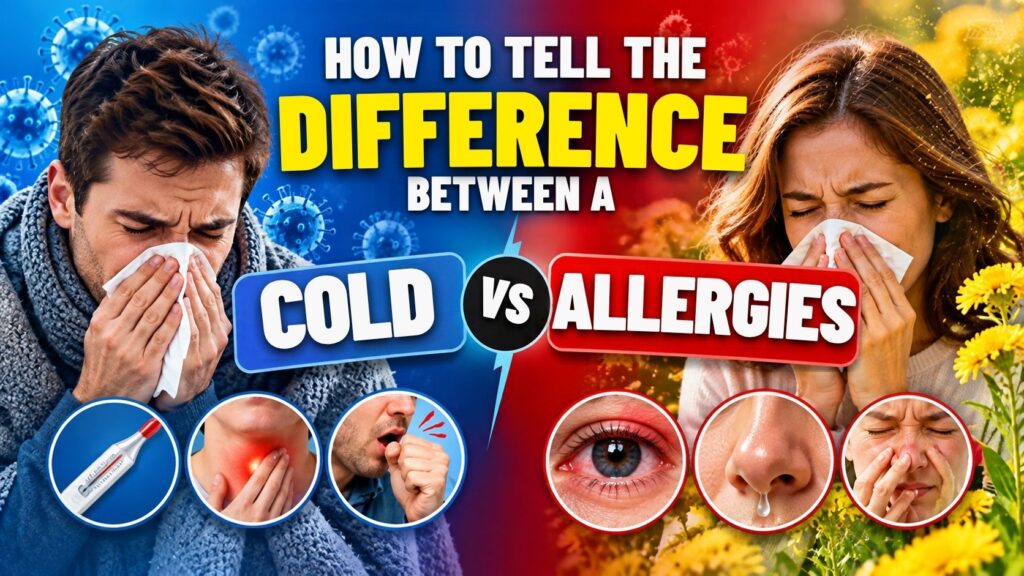
Quick answer: Allergy symptoms vs cold can look alike, but they are not the same. Colds come from a virus and often bring a fever, body aches, and a sore throat. Allergies come from your immune system reacting to things like pollen or dust. Allergies bring itchy, watery eyes and never cause a fever. Colds usually last 7 to 10 days. Allergies can last for weeks.
Do you have a runny nose? Are you sneezing a lot? You might wonder if it’s a cold or an allergy.
This mix-up happens all the time. Allergy symptoms vs cold symptoms can feel almost the same at first.
But there are clear signs that set them apart. Once you know what to look for, you can tell allergies or cold apart in minutes.
This guide walks you through the key differences. You’ll learn what causes each one, how long they last, and when to call a doctor.
By the end, you’ll know how to spot allergy symptoms vs cold without any guesswork.
What Is a Cold?
A cold is caused by a virus. It spreads from person to person through coughs, sneezes, and touch.
More than 200 different viruses can cause a cold. The most common one is called a rhinovirus.
Cold symptoms usually show up a few days after you catch the virus. They tend to build up slowly, then peak, then fade.
Here’s what a typical cold looks like:
- A runny or stuffy nose
- A sore throat, especially early on
- Coughing
- Mild body aches
- A low-grade fever (sometimes)
- Feeling tired
Most colds last 7 to 10 days. Colds are more common in fall and winter, when people spend more time indoors together.
What Are Allergies?
Allergies happen when your immune system reacts to something that isn’t actually harmful. This could be pollen, dust, mold, or pet hair.
Your body treats these things like a threat. It releases chemicals that cause swelling, itching, and extra mucus. This reaction causes your allergy symptoms.
Unlike a cold, allergies are not contagious. You can’t catch them from another person.
Common allergy symptoms include:
- Sneezing
- A runny or stuffy nose
- Itchy, watery eyes
- An itchy nose or throat
- Postnasal drip (mucus dripping down your throat)
Allergies can last for days, weeks, or even months. They stick around as long as you’re exposed to the trigger.
What’s the Difference Between Allergy Symptoms vs Cold?
The biggest clue in allergy symptoms vs cold is timing. Cold symptoms build up slowly over a few days. Allergy symptoms can start right after you’re exposed to a trigger, like fresh-cut grass or a dusty attic.
Fever is another big clue. Colds sometimes bring a low-grade fever. Allergies never cause a fever.
Body aches point to a cold, not allergies. If your whole body feels sore and tired, you’re likely dealing with a virus.
Itchy eyes point to allergies, not a cold. This is one of the clearest signs when you’re trying to figure out allergy symptoms vs cold.
Here’s a simple way to remember it:
- Sudden symptoms after exposure? Likely allergies.
- Slow symptoms over a few days? Likely a cold.
- Fever or body aches? Likely a cold.
- Itchy, watery eyes? Likely allergies.
Duration also matters. Colds run their course in about a week or two. Allergies can last as long as the trigger is around, sometimes for the whole season.
Allergy Symptoms vs Cold: Symptom Comparison
This quick table breaks down allergy symptoms vs cold side by side.
| Symptom | Cold | Allergies |
|---|---|---|
| Runny or stuffy nose | Yes | Yes |
| Sneezing | Yes | Yes |
| Sore throat | Common | Rare |
| Fever | Sometimes | Never |
| Body aches | Common | Rare |
| Itchy, watery eyes | Rare | Common |
| Onset | Gradual, over days | Can be sudden |
| Typical length | 7 to 10 days | Days to months |
| Contagious | Yes | No |
This table makes allergy symptoms vs cold easier to spot at a glance. Keep it in mind next time you’re not feeling well.
Which Symptoms Show Up in Both?
Some symptoms show up in both conditions. This is exactly why allergy symptoms vs cold confusion happens so often.
A runny or stuffy nose happens with both. So does sneezing and coughing.
Fatigue can also show up with either one. Fighting off a virus or an allergic reaction both take energy.
When symptoms overlap like this, look at the other clues. Check for fever, body aches, and itchy eyes. These extra signs help you tell allergies or cold apart, even when the main symptoms look the same.
Read More: How Long Do Allergies Last? Typical Timelines by Allergy Type
When Should You See a Doctor?
Most colds and allergies get better on their own. But sometimes you need extra help.
See a doctor if your symptoms last more than two weeks. This is especially true if they aren’t getting better at all.
Get help right away if you have trouble breathing. This is never something to wait out at home.
Call your doctor if a fever stays high for several days. A high fever that won’t go down needs a checkup.
You should also see a doctor if symptoms get worse after seeming to improve. This can be a sign of a sinus infection or other problem. In fact, about 1% to 5% of colds turn into a bacterial sinus infection, usually around the one-week mark.
If you’re still unsure about allergy symptoms vs cold after a week, a doctor can run quick tests to find out for sure.
How to Feel Better at Home
Whether it’s a cold or allergies, there are simple ways to feel better fast.
Rest and drink water. Your body needs rest and fluids to heal. Water also helps thin out mucus.
Use a humidifier. Dry air can make a stuffy nose feel worse. A humidifier adds moisture back into the air.
Try over-the-counter medicine. Decongestants can ease a stuffy nose. Antihistamines work well for allergies, but not for colds.
Avoid your triggers. If you know pollen or dust sets off your allergies, try to stay away from them. Keep windows shut on high-pollen days.
Wash your hands often. This helps stop a cold virus from spreading to others, or from spreading to you.
Using the right treatment matters. Antihistamines won’t fix a cold virus. And cold medicine won’t calm an allergic reaction. Knowing allergy symptoms vs cold helps you pick the right medicine the first time.
Allergy Symptoms vs Cold: Know Which One You Have
Figuring out allergy symptoms vs cold doesn’t have to be hard. Look at how fast symptoms started. Check for fever and body aches. Notice if your eyes are itchy and watery.
These small clues add up to a clear answer. Once you know whether you’re dealing with allergies or cold, you can pick the right treatment and start feeling better sooner.
If your symptoms don’t improve, or you’re still not sure what you’re dealing with, talk to your doctor. They can help you sort out allergy symptoms vs cold for good, and get you back to feeling like yourself.
FAQ
How can I tell allergy symptoms vs cold apart in one day?
Check for fever and body aches first. These point to a cold. Then check for itchy, watery eyes. These point to allergies.
Can you have allergies and a cold at the same time?
Yes, this can happen. If your symptoms seem unusually severe or mixed, a doctor can help sort out what’s going on.
Why do my allergy symptoms come back every year?
Seasonal allergies return when your trigger, like tree pollen or ragweed, comes back into the air. This often happens at the same time each year.
Is a cold or allergy more likely to cause a sore throat?
A sore throat is much more common with a cold. Allergies rarely cause a sore throat on their own.
How long is too long for cold symptoms?
If cold symptoms last more than two weeks, or get worse after improving, see a doctor. This could point to a sinus infection.