Can allergies cause a sore throat? Yes. Learn why it happens, how to spot the signs, and simple ways to find fast relief.

Quick answer: Yes, allergies can cause a sore throat. When you breathe in things like pollen or pet hair, your body makes extra mucus. This mucus drips down the back of your throat. It is called post-nasal drip. This drip irritates your throat and makes it feel scratchy or sore. The good news? Allergy sore throats usually get better with simple home care and allergy medicine.
Do allergies cause sore throat pain every single day for some people? For many, yes. If you deal with a scratchy throat every spring or fall, allergies might be the reason. Let’s look at why this happens and what you can do about it.
Millions of people deal with allergies every year. A sore throat is one of the most common symptoms. It is not always easy to tell if your sore throat comes from allergies, a cold, or something else. That is why it helps to know the signs.
This article will explain how allergies cause a sore throat. You will also learn the best ways to feel better fast, and when it’s time to call a doctor.
What Are Allergies?
Allergies happen when your body’s immune system makes a mistake. Your immune system is the part of your body that fights off germs. Sometimes, it thinks something harmless is actually dangerous.
For example, pollen from trees is not harmful. But if you have allergies, your body treats pollen like a threat. Your immune system then releases a chemical called histamine.
Histamine is the reason you sneeze, get itchy eyes, and feel a scratchy throat. It causes swelling and irritation in different parts of your body. This swelling is what leads to many allergy symptoms, including a sore throat.
How Do Allergies Cause a Sore Throat?
So, can allergies cause sore throat pain directly? Yes, in a few ways. The biggest cause is something called post-nasal drip.
Post-nasal drip happens when mucus from your nose and sinuses drains down the back of your throat. Normally, this mucus is thin and you don’t even notice it. But allergies make your body produce more mucus than usual.
This extra mucus drips down your throat over and over. It irritates the soft tissue there. Over time, this causes that raw, scratchy feeling you know as a sore throat.
Allergies can also cause mouth breathing. When your nose is blocked from swelling, you breathe through your mouth instead. This dries out your throat and makes soreness worse.
Here’s a simple way to picture it. Think of your throat like skin on your hand. If you rub skin over and over, it gets red and sore. Post-nasal drip does something similar inside your throat.
What Triggers Allergy Symptoms Like a Sore Throat?
Different things can trigger allergies depending on the season and your home. Here are the most common ones:
- Pollen: This comes from trees, grass, and flowers. It is worst in spring and fall.
- Pet dander: Tiny flakes of skin from cats and dogs can trigger allergies year-round.
- Dust mites: These tiny bugs live in bedding, carpets, and furniture.
- Mold spores: Mold grows in damp places like bathrooms and basements.
If you notice your sore throat shows up at the same time every year, pollen is likely the cause. If it happens all year, pet dander or dust mites might be to blame instead.
What Does an Allergy Sore Throat Feel Like?
Knowing the signs helps you figure out if allergies cause your sore throat. Allergy sore throats usually feel different from sore throats caused by viruses or infections.
Common signs of an allergy sore throat include:
- A scratchy or itchy feeling in your throat
- Mild pain when you swallow
- A dry cough
- A hoarse voice
- Other allergy symptoms at the same time, like sneezing, itchy eyes, or a runny nose
One helpful clue comes from Baylor Scott & White Health. They note that an allergy sore throat often feels worse right after you wake up. It tends to get better as the day goes on, especially after you drink something and the post-nasal drip settles down.
Allergy sore throats also tend to stick around. They can last for several weeks, matching how long your allergy season lasts. The pain usually stays mild and does not get worse day by day.
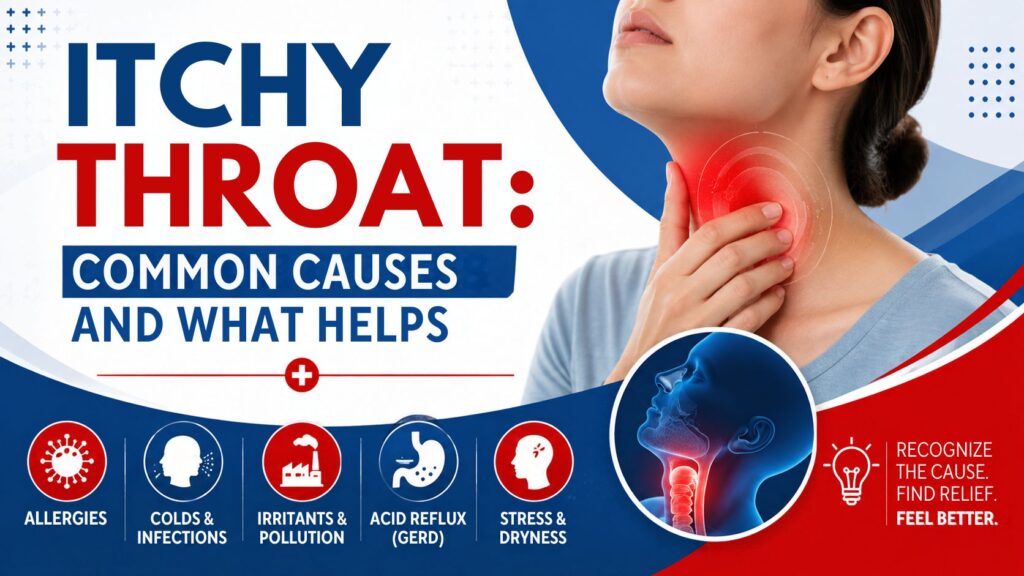
Read More: Itchy Throat: Common Causes and What Helps
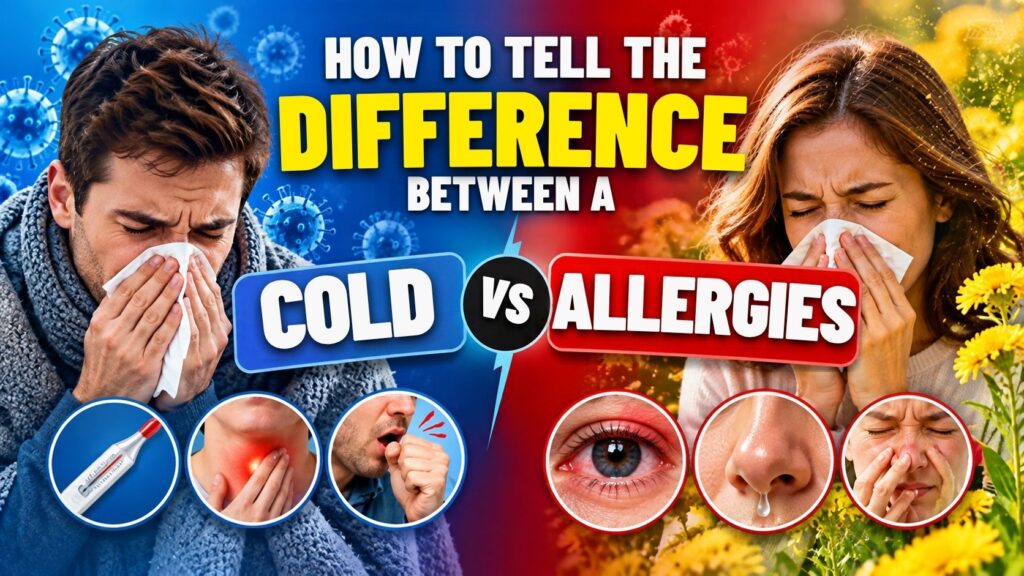
Allergy Sore Throat vs. Strep Throat and Colds: How Can You Tell the Difference?
It helps to know how an allergy sore throat is different from other causes. This way, you know what kind of care you need.
Choose allergy care if:
- Your sore throat came on slowly
- You also have sneezing, itchy eyes, or a runny nose
- You don’t have a fever
- Your symptoms last for weeks, not days
- Your throat feels worse in the morning and better later
Choose cold or flu care if:
- You have a cough, congestion, and body aches
- Your throat pain came with a mild fever
- Symptoms came on over a day or two
- You feel tired and achy all over
See a doctor for strep throat if:
- Your throat pain started suddenly and feels severe
- You have a high fever
- You see white or red patches on your tonsils
- Your lymph nodes feel swollen
- You don’t have a cough or runny nose
According to Dr. Christine Bozich at MultiCare, strep throat rarely comes with a cough or runny nose. If you have those symptoms, it’s probably not strep.
How Can You Get Relief From an Allergy Sore Throat?
The good news is that most allergy sore throats can be treated at home. Here are steps that can help:
1. Drink plenty of fluids. Water, warm tea, and broth keep your throat moist. This helps wash away irritation from post-nasal drip.
2. Try a humidifier. Dry air makes a sore throat worse. A humidifier adds moisture to the air in your home, especially while you sleep.
3. Gargle with warm salt water. Mix about half a teaspoon of salt into a cup of warm water. Gargle a few times a day to ease swelling.
4. Take an antihistamine. These medicines block histamine, the chemical that causes allergy symptoms. They are sold over the counter at most drugstores.
5. Use a nasal spray. A saline or allergy nasal spray can reduce the mucus causing your post-nasal drip.
6. Avoid your triggers. If pollen bothers you, keep windows closed on high-pollen days. If pet dander is the problem, keep pets out of your bedroom.
7. Try throat lozenges. These can soothe pain and keep your throat moist between drinks.
Most people start feeling better within a few days once allergy symptoms are under control. If your sore throat does not improve, it might be time to see a doctor.
When Should You See a Doctor for a Sore Throat?
Most allergy sore throats are mild and go away with home care. But some symptoms mean you should see a doctor.
Call a doctor if you have:
- A sore throat that lasts more than one week
- A fever over 102°F
- Severe pain that makes swallowing hard
- White patches or redness on your tonsils
- Swollen or painful lymph nodes in your neck
- Trouble breathing or opening your mouth wide
- Signs of a bad allergic reaction, like swelling in your face or throat
A doctor can run tests to check for strep throat or other infections. They can also help you find the right allergy treatment if over-the-counter medicine isn’t working.
The Bottom Line
So, can allergies cause a sore throat? Yes, they absolutely can. Post-nasal drip from allergies is one of the most common reasons for a scratchy, sore throat that sticks around for weeks.
The key is to look at your other symptoms. If your sore throat comes with sneezing, itchy eyes, and a runny nose, and it has lasted a while without a fever, allergies are likely the cause.
Try the relief tips above, like drinking fluids, using a humidifier, and taking an antihistamine. If your throat doesn’t improve, or you notice signs like fever or severe pain, talk to a doctor. They can help you find relief and rule out other causes.
Frequently Asked Questions
Can allergies cause a sore throat without other symptoms?
It’s possible, but unusual. Most allergy sore throats happen alongside other signs like sneezing, a runny nose, or itchy eyes. If your sore throat is your only symptom, it’s worth considering other causes, like a cold or dry air.
How long does an allergy sore throat usually last?
An allergy sore throat can last as long as your allergy triggers are around. This is often several weeks during pollen season. It tends to improve once you treat your allergies or the trigger goes away.
Do allergies cause sore throat pain that feels like strep throat?
No. Allergy sore throats are usually mild and come on slowly. Strep throat causes sudden, severe pain, often with a fever and white patches on the tonsils. If your pain feels severe, see a doctor to check for strep.
What is the fastest way to relieve an allergy sore throat?
Gargling with warm salt water and taking an antihistamine often bring quick relief. Drinking warm fluids and using a humidifier can also help soothe the irritation right away.
Can children get sore throats from allergies too?
Yes. Children can get allergy sore throats just like adults. Watch for other allergy signs, like sneezing or itchy eyes. If you’re unsure, a pediatrician can help confirm if allergies are the cause.