
Discover the 10 most common hydration mistakes and simple, science-backed fixes. Learn how to drink water the right way and stay properly hydrated all day.
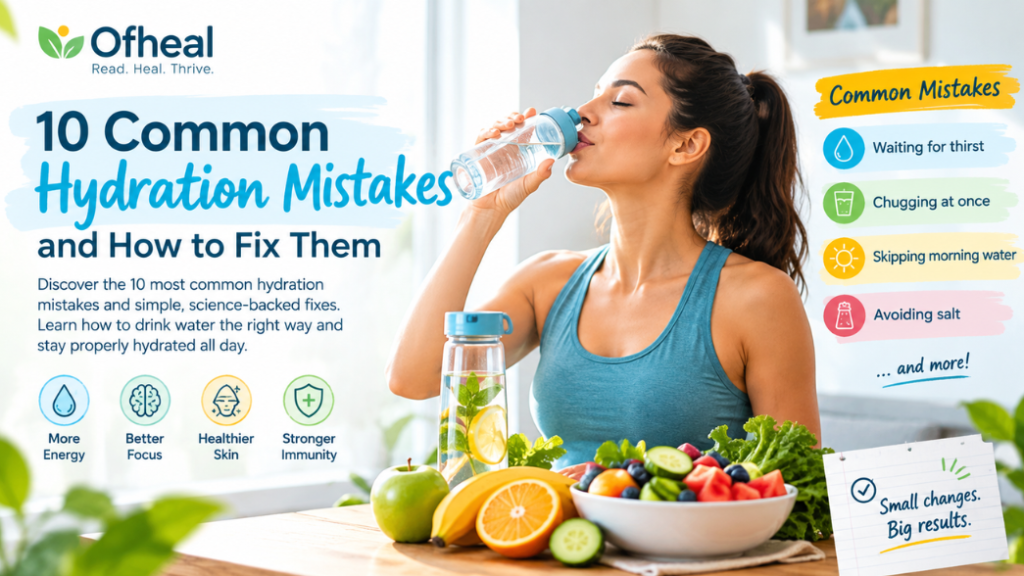
Quick answer: The most common hydration mistakes include waiting until you feel thirsty, chugging water all at once, skipping water in the morning, and avoiding salt completely. Small daily changes—like sipping steadily and eating water-rich foods—help your body absorb fluids better and stay properly hydrated.
Water keeps your whole body running. Your muscles, skin, brain, and mood all depend on it. In fact, an adult body is about 60% water. Your brain alone is about 75% water.
So it makes sense that staying hydrated matters a lot. But here’s the thing—many of us get hydration wrong without even knowing it. We drink at the wrong times. We follow old rules that don’t fit our bodies. We skip foods that could help.
The good news? These mistakes are easy to fix. In this post, you’ll learn the 10 most common hydration mistakes people make. You’ll also get simple, science-backed tips to fix each one. Let’s dive in.
Why does proper hydration matter so much?
Before we look at the mistakes, let’s talk about why hydration is a big deal.
Water helps every cell in your body work well. It keeps your joints smooth. It helps your skin look fresh. It even helps stop you from overeating.
But even small water loss can hurt you. Studies show that just 2% dehydration can lower your focus and memory. It can also slow down your body during exercise.
Here’s a worrying fact. Research shows that 25% to 33% of adults in the US and Europe drink less than 1.5 liters of fluid each day. That means many people walk around mildly dehydrated. And they don’t even realize it.
Now, let’s fix that.
The 10 Common Hydration Mistakes to Watch out for.
1. Waiting until you feel thirsty to drink
This is one of the biggest hydration mistakes people make. Many folks think thirst is the first sign you need water. But that’s not true.
By the time you feel thirsty, you may already be dehydrated. Your body sends the thirst signal a bit late.
This matters even more for two groups. Kids often forget to drink while they play. And older adults feel thirst less as they age. So they may not drink enough.
The fix: Don’t wait for thirst. Sip water throughout the day. Keep a bottle nearby as a gentle reminder. Set a phone alarm if that helps you remember.
2. Blindly following the “8 glasses a day” rule
You’ve heard it a thousand times. Drink eight glasses of water a day. It sounds simple. But it’s not the full story.
The truth is, there’s no single rule that fits everyone. How much water you need depends on many things. Your body size matters. So does your activity level, the weather, and even your city’s elevation.
A more helpful guide is this: drink about ½ to 1 ounce of liquid per pound of body weight. So a person who weighs 160 pounds needs at least 80 ounces a day.
The fix: Use your body, not a fixed number. Check your urine color instead. Pale yellow means you’re hydrated. Dark yellow or amber means you need more water.
Read More: What Happens to Your Body When You Drink Enough Water
3. Trying to hydrate all at once
Remember cramming for a test the night before? It rarely worked. The same idea applies to water.
You can’t fix a whole day of low water by chugging a big bottle at once. When you drink too much water fast, your body can’t absorb it all. Most of it just flushes out.
Even worse, drinking too much too fast can be risky. Drinking more than 3½ to 4 cups in one hour may lead to overhydration. This can throw off your body’s electrolyte balance.
The fix: Spread your water out over the whole day. Small, steady sips work best. This helps your body soak up the fluid properly.
4. Skipping water first thing in the morning
Here’s a hydration mistake many people don’t think about. You lose fluids while you sleep. Most of this loss comes from breathing all night long.
The loss is even bigger if you snore, breathe through your mouth, or have sleep apnea. A hot or dry bedroom adds to it too.
So even if you go to bed hydrated, you wake up a little dehydrated. Starting your day with coffee alone won’t fully fix that.
The fix: Drink a big glass of water when you wake up. Aim for about 16 ounces. This simple habit jumpstarts your hydration for the day.
5. Forgetting that food counts as hydration
Many people think water is the only way to stay hydrated. But that’s not quite right. Your food plays a big role too.
In fact, about 20% of your daily fluid should come from what you eat. That’s a large chunk. And many foods are packed with water.
Cucumber and lettuce are more than 90% water. Fruits like oranges, apples, and bananas are great too. Bananas and avocados also give you potassium, which helps with hydration.
The fix: Fill half your plate with fruits and vegetables at each meal. Snack on juicy fruits between meals. Your body will thank you.
6. Avoiding salt completely
Salt has a bad reputation. And yes, too much sodium can be unhealthy. But cutting salt out completely is also a hydration mistake.
Here’s why. Sodium is a key electrolyte. Along with potassium and chloride, it helps carry water to your cells. So a diet too low in salt can actually raise your risk of dehydration.
Think about a sweaty workout. Ever notice a gritty feeling on your skin? That grit is salt leaving your body through sweat. You need to replace it.
The fix: Don’t fear a little salt, unless your doctor says otherwise. After a sweaty workout, enjoy a salty snack like pretzels. Or reach for an electrolyte drink to refill what you lost.
7. Relying on sugary sports drinks
Sports drinks are often sold as the best way to hydrate. But many of them fall short. This is a common hydration mistake, especially for athletes.
The problem is sugar. Many sports drinks pack in too much of it. And they often don’t have enough electrolytes to fully refill you.
Too much sugar can actually make dehydration worse. It can also upset your stomach and cause issues like diarrhea. Plus, sugar can slow down how well your body absorbs fluids.
The fix: Read the label before you buy. Choose a drink with more electrolytes and less sugar. For most light workouts, plain water and a healthy snack do the job.
8. Thinking coffee and tea always dehydrate you
Do you skip coffee to avoid losing water? Many people do. But this hydration mistake is based on an old myth.
Yes, caffeine is a diuretic. That means it makes you pee a bit more. But caffeinated drinks are not as drying as people once believed.
A 2014 study in PLOS ONE proved this. Men who drank three to six cups of coffee a day were just as hydrated as those who drank the same amount of water.
The fix: Enjoy your morning coffee or tea without guilt. It still counts toward your fluids. Just start your day with a glass of water first, then sip your coffee.
9. Aiming for crystal-clear urine
You may have heard that clear urine means you’re doing great. But that’s not the goal. In fact, it can be a sign of a hydration mistake in the other direction.
Urine color is a great hydration check. Dark yellow or amber means you need more water. But crystal-clear urine often means you’re drinking too much.
Overhydration can wash out your electrolytes. This throws your body’s balance off track. So clear isn’t always better.
The fix: Aim for a light yellow or straw color. That’s the sweet spot. It shows you’re hydrated but not overdoing it.
10. Only drinking water after a workout
Many people wait until after exercise to grab their water bottle. Chugging water post-workout does help. But it’s not enough on its own. This is a hydration mistake that hurts your performance.
Here’s the key point. Even 2% dehydration can lower both your mental and physical performance. So if you start your workout already low on fluids, you won’t feel your best.
You may tire faster. Your focus may drop. And your muscles may not work as well.
The fix: Hydrate before, during, and after exercise. Start your workout well hydrated. Keep a bottle handy and sip during your session. Then refill after you finish.
How to build better hydration habits every day
Now you know the top hydration mistakes. Let’s pull it all together with a simple daily plan.
- Start with water. Drink 16 ounces when you wake up.
- Sip all day. Keep a bottle close and take small, steady sips.
- Eat your water. Load half your plate with fruits and veggies.
- Check your color. Aim for light yellow urine, not clear.
- Balance electrolytes. Don’t skip salt, especially after sweating.
- Time your workouts. Drink before, during, and after exercise.
These small steps add up fast. And they’re easy to fit into a busy day. You don’t need fancy tools or strict rules. You just need to listen to your body.
Final thoughts on avoiding hydration mistakes
Staying hydrated isn’t hard once you know the facts. Most hydration mistakes come from old myths and simple habits. The eight-glass rule, the fear of salt, and waiting for thirst all trip us up.
But now you have the tools to do better. Sip steadily. Eat water-rich foods. Trust your urine color over a fixed number. And treat food and electrolytes as part of the plan.
Try picking just one or two fixes to start. Maybe drink a glass of water each morning. Or add more fruit to your meals. Small changes stick better than big ones.
Your body works hard for you every day. Give it the water it needs, and you’ll feel the difference.
Frequently asked questions about hydration mistakes
How much water should I drink each day?
There’s no single number that fits everyone. A good guide is ½ to 1 ounce of liquid per pound of body weight. So a 160-pound person needs at least 80 ounces daily. Your needs rise with heat, exercise, and altitude.
Can you drink too much water?
Yes, you can. Drinking more than 3½ to 4 cups of water in one hour may cause overhydration. This can upset your electrolyte balance. Crystal-clear urine is often a sign you’re drinking too much.
What is the best time to drink water?
Spread your water across the whole day for best results. Start with a big glass in the morning, since you lose fluids while sleeping. Then sip steadily instead of drinking large amounts at once.
Do coffee and tea count toward hydration?
Yes, they do. While caffeine makes you pee a bit more, caffeinated drinks still hydrate you. A 2014 PLOS ONE study found coffee drinkers were just as hydrated as water drinkers.
How can I tell if I’m dehydrated?
Check your urine color first. Dark yellow or amber usually means you need more water. Light yellow or straw color means you’re hydrated. Remember, thirst can show up after dehydration has already started.
Does food help with hydration?
Absolutely. About 20% of your daily fluids can come from food. Cucumber and lettuce are more than 90% water. Fruits like oranges and watermelon are great hydrating choices too.
Is salt bad for hydration?
Not always. Sodium is a key electrolyte that helps carry water to your cells. A diet too low in salt can raise your dehydration risk. After sweating, replace lost sodium with a snack or electrolyte drink.