
Feeling tired all the time? Discover the common lifestyle factors that cause low energy, plus simple tips to feel more awake and energized every day.
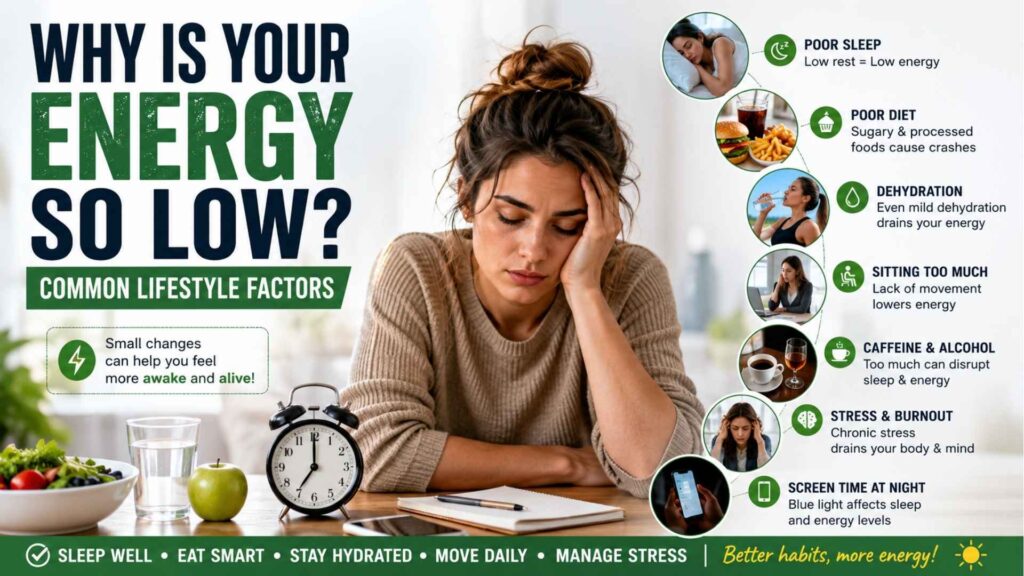
Quick answer: Low energy is often caused by everyday habits, not illness. Poor sleep, a bad diet, dehydration, sitting too much, too much caffeine or alcohol, stress, and late-night screen time all drain your energy. Small changes to these habits can help you feel more awake and alive.
Do you feel tired all the time, even after a full night in bed? You are not alone. Many people wake up drained and drag themselves through the day. It is a frustrating way to live.
The good news is simple. Most of the time, low energy comes from your daily habits. It is not always a sign of a serious health problem. That means you have the power to fix it.
In this post, we will look at the most common lifestyle factors that leave you feeling flat. We will explain why each one matters. Then we will share easy tips to help you get your spark back.
Ready to feel more awake and alive? Let’s dig in.
What Does “Low Energy” Really Mean?
Low energy is more than just being sleepy. It is a heavy, drained feeling that sticks around. You may feel it in your body, your mind, or both.
Common signs of low energy include:
- Feeling tired even after you rest
- Trouble focusing or thinking clearly
- Low motivation to do simple tasks
- Sore or weak muscles
- Feeling grumpy or moody
Everyone feels tired now and then. A good nap or a few nights of sleep usually fix normal tiredness. But if you feel drained day after day, your habits may be to blame.
Let’s look at the top lifestyle factors that steal your energy. Each one is easy to spot once you know what to look for.
Read More: Why Do You Wake Up Tired? 7 Causes and Simple Fixes
How Does Poor Sleep Drain Your Energy?
Sleep is the number one fuel for your body. When you skip it, your energy tank runs dry. It really is that simple.
Poor sleep is one of the biggest reasons people feel tired. Too little sleep hurts you. But too much sleep or broken sleep can also leave you drained.
Many things can ruin your sleep. Noisy neighbors, a snoring partner, or a stuffy bedroom can all keep you up. Young kids who wake at night can wreck your rest too.
How Many Hours of Sleep Do You Really Need?
Most adults need seven to nine hours of sleep each night. That is the sweet spot for good energy. Less than that, and you will likely feel the drag.
Try to go to bed and wake up at the same time each day. Your body loves a steady routine. It helps you fall asleep faster and wake up fresher.
What Happens When You Don’t Sleep Well?
When you skip sleep, your mood and mind suffer. In one Harvard study, people who slept just four and a half hours felt more stressed, sad, and angry. They also felt more worn out.
Poor sleep can also raise cortisol, your stress hormone, according to Cleveland Clinic. High stress makes it even harder to rest. It becomes a tiring cycle that feeds on itself.
Quick tips for better sleep:
- Aim for seven to nine hours each night
- Keep your bedroom cool, dark, and quiet
- Skip caffeine late in the day
- Avoid screens before bed
- Go to sleep and wake at the same time daily
How Does a Poor Diet Affect Your Energy Levels?
Food is fuel. What you eat shapes how you feel all day long. A poor diet can leave you dragging by noon.
Skimpy diets that cut too many calories starve your body of fuel. Low-nutrient foods do the same. Your body needs the right building blocks to keep going strong.
What Foods Cause Energy Crashes?
Sugary snacks and drinks give you a quick lift. But that boost fades fast. Then you crash and feel worse than before.
Think of a candy bar or a sweet soda. They spike your blood sugar, then drop it just as quickly. That drop is what makes you feel sluggish and slow.
Foods that often lead to energy crashes include:
- Candy and sweets
- Soda and sugary drinks
- White bread and pastries
- Fried, greasy foods
- Too much caffeine paired with sugar
What Should You Eat to Stay Energized All Day?
The best fuel gives you steady energy. That means whole, real foods over quick fixes. They release energy slowly, so you stay powered longer.
Good energy-boosting foods include:
- Whole grains like oats and brown rice
- Lean protein like eggs, beans, and chicken
- Fruits and vegetables of all colors
- Nuts and seeds for healthy fats
- Water instead of sugary drinks
Try not to skip meals either. Going too long without food can leave you weak and shaky. Small, balanced meals keep your energy even.
Can Dehydration Make You Feel Tired?
Yes, and this one surprises many people. Even mild dehydration can zap your energy. You may not even feel thirsty yet.
Water keeps your whole body running. When you run low, everything slows down. Your blood volume drops, and your cells struggle to work.
Research shows that losing just one to two percent of your body fluid can hurt you. It reduces blood volume and shifts your electrolytes. This leads to tiredness, poor focus, and low alertness.
Many people walk around a little dehydrated without knowing it. They reach for coffee when a glass of water might help more. Water is often the cheapest energy fix around.
Simple ways to stay hydrated:
- Keep a water bottle with you all day
- Drink a glass of water when you wake up
- Sip water with every meal
- Eat water-rich foods like fruit and soup
- Cut back on sugary and salty drinks
How Does Sitting Too Much Cause Low Energy?
It sounds odd, but resting too much can make you tired. A sedentary lifestyle means you sit or lie down most of the day. Over time, this drains your energy.
When you don’t move, your muscles have less demand. Your metabolism and blood flow slow down, says Cleveland Clinic. A slow body often feels like a tired body.
Moving your body actually creates energy. Exercise boosts fitness, lifts your mood, and helps you sleep. One study found that regular activity fights fatigue, even for busy people.
You do not need to run a marathon. A short walk can wake you up fast. Small bursts of movement add up over the day.
Easy ways to move more:
- Take a walk on your lunch break
- Stretch every hour if you sit at a desk
- Use stairs instead of the elevator
- Try a quick home workout
- Dance to your favorite song
One warning here. Too much hard exercise can also tire you out. Balance is key. Find a level that leaves you energized, not wiped out.
Do Caffeine and Alcohol Lower Your Energy?
Both drinks can mess with your energy, though in different ways. Many people rely on them daily. But they can work against you.
Caffeine wakes you up in the moment. That is why coffee feels so helpful. But too much can cause jitters and ruin your sleep at night.
If you drink coffee late, it may keep you up. Poor sleep then makes you reach for more coffee. It becomes a loop that drains you over time.
Alcohol is a different story. It slows your nervous system down. It may make you sleepy at first, but it wrecks the quality of your sleep.
You might sleep for hours after drinking and still wake up tired. That is because alcohol breaks up your deep, restful sleep. Your body never fully recharges.
Smart habits with caffeine and alcohol:
- Keep caffeine to the morning hours
- Do not use coffee to skip real rest
- Drink alcohol in moderation, if at all
- Have a glass of water between drinks
- Notice how each affects your sleep
How Do Stress and Burnout Rob Your Energy?
Stress does not just weigh on your mind. It drains your body too. Long-term stress is a huge cause of low energy.
When you feel stressed, your body stays on high alert. This uses up energy fast. Over weeks and months, it leaves you empty and worn out.
Burnout takes this even further. It is a state of feeling exhausted and overwhelmed. The World Health Organization calls it an occupational phenomenon. It often comes from pushing too hard at work.
Worry and low mood also sap your strength. Anxiety and depression both list fatigue as a key sign. Your mind and body are deeply linked.
Ways to lower stress and save energy:
- Try yoga, meditation, or slow breathing
- Take short breaks during your workday
- Talk to a friend about your worries
- Make time for things you enjoy
- Ask for help when your plate is too full
If stress feels too big to handle alone, reach out. A doctor or counselor can offer real support. There is no shame in asking for help.
Does Screen Time at Night Cause Low Energy?
Late-night scrolling may be draining you. The light from screens can hurt your sleep. Poor sleep then leads to low energy the next day.
Phones, tablets, and TVs give off blue light. This light tricks your brain into thinking it is still daytime. So your body does not wind down for rest.
Harvard Health found that blue light suppresses melatonin. Melatonin is the hormone that makes you sleepy. Blue light held it back for about twice as long as green light.
Blue light also shifted people’s sleep clocks by three hours. That is a big change to your natural rhythm. No wonder late screens leave you feeling off.
Tips to protect your sleep from screens:
- Turn off screens an hour before bed
- Use night mode on your devices
- Keep your phone out of the bedroom
- Read a paper book instead
- Dim the lights in the evening
What Are the Best Ways to Boost Your Energy Naturally?
By now you can see a clear pattern. Most low energy comes from a handful of habits. Fix those habits, and your energy often bounces back.
You do not need to change everything at once. Pick one or two habits to start. Small wins build into big changes over time.
Here is a simple checklist to boost your energy naturally:
- Sleep well: Get seven to nine hours each night
- Eat smart: Choose whole foods over sugar
- Drink water: Stay hydrated all day long
- Move often: Add walks and stretches to your day
- Watch caffeine and alcohol: Use them wisely
- Manage stress: Rest your mind, not just your body
- Limit screens: Give your eyes a break at night
Give these changes a few weeks to work. Your body needs time to adjust and heal. Be patient and kind to yourself.
Sometimes low energy is not about habits at all. If you feel drained for more than a few days, see a doctor. Fatigue can be a sign of a health issue that needs care.
You should also call a doctor if your tiredness comes on fast. The same goes if you lose weight or cannot do daily tasks. It is always safe to check.
Take Back Your Energy Starting Today
Low energy can make life feel like a struggle. But you are not stuck with it. Most of the time, your daily habits hold the answer.
Sleep, food, water, movement, and rest all play a part. So do your screen time and stress levels. Each small choice adds up to how you feel.
Start with just one change this week. Maybe drink more water or head to bed earlier. Watch how your energy slowly begins to lift.
Your body wants to feel good. Give it what it needs, and it will reward you. Here is to more energy and brighter days ahead.
Frequently Asked Questions
Why do I feel tired all the time even after sleeping?
You may sleep long but not sleep well. Broken or poor-quality sleep leaves you tired. Stress, alcohol, and late screens can all hurt your sleep quality, even during a full night in bed.
Can drinking more water really boost my energy?
Yes. Even mild dehydration can make you feel tired and foggy. Losing just one to two percent of body fluid lowers blood volume. Drinking water often helps you feel sharper and more awake.
What foods give you the most energy?
Whole foods work best. Oats, brown rice, eggs, beans, fruits, and vegetables give steady energy. Nuts and seeds add healthy fats. These foods release energy slowly and help you avoid crashes.
How long does it take to feel more energy after changing my habits?
Most people notice changes within a few weeks. Sleep and hydration may help within days. Stick with your new habits and give your body time to adjust and recharge.
When should I see a doctor about low energy?
See a doctor if you feel drained for more than a few days. Also seek help if tiredness comes on fast, has no clear cause, or comes with weight loss. Fatigue can sometimes signal a health issue.