Norovirus vs. food poisoning: learn the key differences in symptoms, onset time, and duration, plus how to treat each at home and when to see a doctor.
Norovirus and food poisoning share symptoms like vomiting and diarrhea, but they differ in cause and timing. Norovirus is a virus that spreads between people fast. Food poisoning comes from bad food. Food poisoning often starts within hours, while norovirus takes 12 to 48 hours.
Your stomach turns. You feel sick. You run to the bathroom. In that moment, you just want to know one thing: what is making you feel so bad? Is it something you ate? Or did you catch a bug going around?
Telling norovirus and food poisoning apart can be tricky. They look a lot alike. Both bring nausea, vomiting, and diarrhea. Both can leave you weak and worn out. But there are real clues that help you spot the difference.
This guide breaks it down in simple terms. You will learn what causes each one, how fast they hit, and how long they last. You will also learn how to feel better at home and when to call a doctor. Let’s get you some answers fast.
What Is Norovirus?
Norovirus is a virus that upsets your stomach and gut. Doctors call this acute gastroenteritis. That is a fancy way to say your stomach and intestines get swollen and angry.
Norovirus spreads very easily. You can catch it from a sick person. You can catch it from touching a dirty surface. You can even catch it from bad food or water. It moves fast through homes, schools, and cruise ships.
The virus is a big deal. The CDC says norovirus causes 19 to 21 million illnesses each year in the United States. It also leads to about 109,000 hospital stays and 900 deaths per year. Most deaths happen in adults age 65 and older.
Norovirus is the top cause of vomiting and diarrhea in the country. It shows up most from November through April. That is why some people call it the “winter vomiting bug.”
Read More: How Long Does Norovirus Last?
Watch:
What Is Food Poisoning?
Food poisoning is illness from bad food or drink. You get sick from something you ate. The food may have germs, a virus, or harmful toxins in it.
Many things can cause food poisoning. Bacteria like Salmonella and Campylobacter are common. Food left out too long can grow these germs. Food that is not cooked right can also make you sick.
Food poisoning is very common too. The USDA says bad food causes about 48 million illnesses each year in the United States. It also leads to around 3,000 deaths per year.
Here is a twist. Norovirus can cause food poisoning too. If the virus gets into your food, eating it makes you sick. In fact, the CDC says norovirus causes 58% of foodborne illnesses in the country. So the two can overlap.
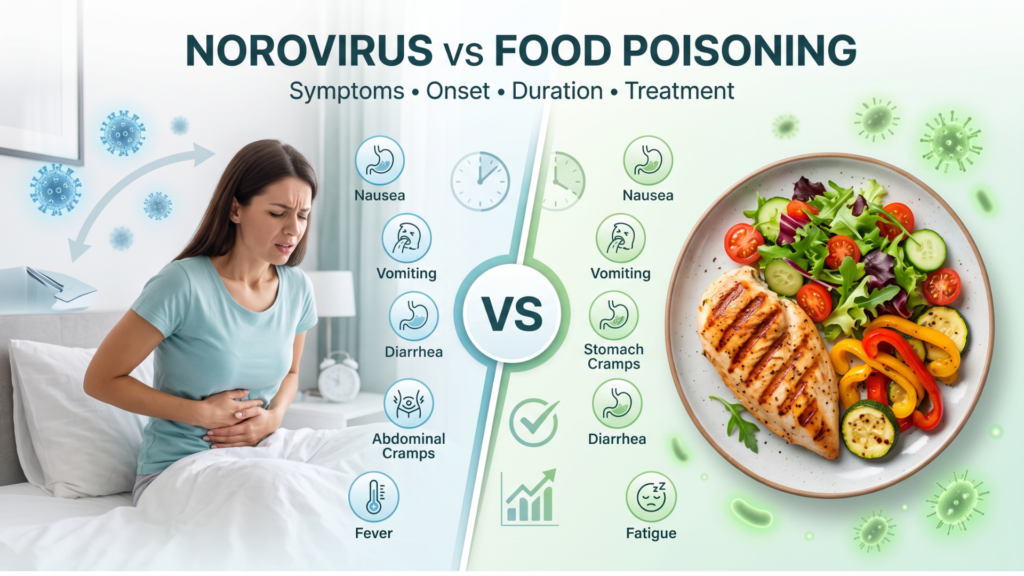
What Are the Symptoms of Norovirus vs. Food Poisoning?
Many symptoms of norovirus and food poisoning look the same. That is why they are so easy to mix up. Still, small clues can point you the right way.
Both illnesses share these signs:
- Nausea
- Vomiting
- Diarrhea
- Stomach cramps
Norovirus often adds a few extra symptoms:
- Low-grade fever
- Fatigue and feeling weak
- Headache
- Muscle aches
Food poisoning has its own quirks too. Your stool may look a different color. It may have a strange texture. Sometimes it can be bloody or have mucus in it. You can get a fever with food poisoning as well, based on the germ that caused it.
Fever is more common with norovirus. But it can pop up with both. So one symptom alone will not give you the full answer. You need to look at the whole picture.
How Fast Do Norovirus and Food Poisoning Start?
Timing is one of the best clues you have. The two illnesses hit at different speeds.
Food poisoning often comes on fast. Some cases start just 1 to 6 hours after you eat bad food. This is common when a preformed toxin is in the food. Other cases take longer, up to 1 to 3 days.
Norovirus takes more time. Symptoms usually show up 12 to 48 hours after you meet the virus. Sometimes it can take up to 72 hours.
So think back. Did you get sick soon after a meal? That points to food poisoning. Did your symptoms build slowly a day or two later? That points more to norovirus.
Here is a helpful example. Say you go to a picnic. Many people eat the same egg salad. A few hours later, lots of them feel sick. That fast, shared timing screams food poisoning.
Now say you feel fine at the picnic. Two days later, your stomach turns. You remember your coworker was sick last week. That slower timing points to norovirus.
How Long Does Each One Last?
Duration gives you another strong clue. Both illnesses tend to pass on their own.
Food poisoning often runs its course fast. It can last a few hours to a few days. Many times, your body clears out the bad stuff quickly. Then you start to feel better.
Norovirus usually lasts a bit longer. Most cases run 1 to 3 days. Some people feel rough for even longer. The virus needs time to work through your system.
So if you bounce back in a day, it may have been food poisoning. If you feel sick for two or three days, norovirus is more likely.
Are Norovirus and Food Poisoning Contagious?
This is a big difference between the two. It also changes how you protect the people around you.
Norovirus is very contagious. It spreads through close contact with sick people. It spreads through dirty surfaces. It even spreads through the air when someone throws up. Worse yet, you can still spread it for days after you feel better.
Food poisoning is not usually contagious. You caught it from food, not a person. Still, the germ that made you sick could spread if it gets into more food or drink.
This is why hand washing matters so much with norovirus. If one person in your home gets it, the rest are at real risk. Take extra care to stop it from jumping to others.
How Do You Treat Norovirus and Food Poisoning at Home?
Good news. Most cases of both illnesses get better on their own. You just need to help your body along. The care is much the same for each one.
Stay hydrated. This is the most important step. Vomiting and diarrhea drain fluids fast. Drink water in small sips to start. You can also try broth or a drink with electrolytes. Mixing half water and half Pedialyte can be gentle on your stomach.
Eat bland foods. When you feel ready, keep it simple. Try the BRAT foods: bananas, rice, applesauce, and toast. Stay away from dairy, spicy foods, caffeine, and alcohol for now.
Use the right medicine. Over-the-counter drugs can ease your symptoms. Imodium may help with diarrhea. Tylenol can help with a headache or fever. A doctor can also give you medicine to stop nausea.
One key note about antibiotics. They do not work on viruses like norovirus. They can even make some food poisoning cases worse. So never start antibiotics on your own. Let a doctor decide if you need them.
Rest is your friend here too. Your body is fighting hard. Give it time and space to heal.
When Should You See a Doctor?
Most stomach bugs clear up at home. But sometimes you need real medical help. Watch for warning signs and act fast if you see them.
Call a doctor or visit urgent care if you have:
- Vomiting or diarrhea more than once an hour
- Symptoms that last longer than one day
- A high fever over 102°F (about 39°C)
Head to the emergency room if you notice:
- Severe stomach pain
- Blood in your stool
- Signs of bad dehydration
Dehydration is the biggest risk with both illnesses. Watch for a dry mouth, chapped lips, and dizziness. Notice if you are peeing less than normal. In kids, look for few or no tears when they cry.
Some people face a higher risk of serious illness. This includes young children, adults over 65, and pregnant women. People with weak immune systems are at risk too. If this sounds like you or a loved one, seek care sooner.
How Do You Prevent Norovirus and Food Poisoning?
You can lower your chances of getting sick. A few simple habits go a long way. Prevention looks a little different for each illness.
To stop norovirus:
- Wash your hands with soap and water often. Hand sanitizer alone does not kill this virus well.
- Clean and disinfect high-touch spots like doorknobs and sinks.
- Wash dirty towels and sheets in hot water right away.
- Stay home for 2 to 3 days after your symptoms stop.
To stop food poisoning:
- Wash your hands before you cook and eat.
- Clean your food prep area well.
- Cook food, especially meat and seafood, all the way through.
- Store food at the right temperature. Do not leave it out too long.
- Rinse fruits and veggies before you eat them.
A good rule to live by: when in doubt, throw it out. If food smells off or has sat out too long, do not risk it.
Norovirus vs. Food Poisoning: Quick Comparison
Here is a fast side-by-side look to help you decide:
- Cause: Norovirus is a virus. Food poisoning comes from bad food, often from bacteria.
- How it spreads: Norovirus spreads person to person. Food poisoning spreads through food.
- Onset: Norovirus takes 12 to 48 hours. Food poisoning can start in 1 to 6 hours.
- Duration: Norovirus lasts 1 to 3 days. Food poisoning often clears faster.
- Fever: More common with norovirus.
- Bloody stool: More likely with some bacterial food poisoning.
- Contagious: Norovirus is very contagious. Food poisoning usually is not.
- Treatment: Both need rest and fluids. Antibiotics help only some bacterial cases.
Feel Better and Stay Safe
Norovirus and food poisoning can knock you flat. They share many of the same symptoms, so mixing them up is easy. But now you know the clues to tell them apart.
Focus on three things: the cause, the timing, and how long it lasts. Food poisoning hits fast after a bad meal and often fades quick. Norovirus builds slower, lasts longer, and spreads to others with ease.
No matter which one you have, the plan is simple. Rest up. Drink plenty of fluids. Eat bland foods when you can. And watch for warning signs that mean it is time to see a doctor.
Your body is strong. With a little care, you will be back to yourself soon. Keep washing those hands, handle your food with care, and you can dodge the next bug going around.
Frequently Asked Questions
Can you tell the difference between norovirus and food poisoning at home?
Yes, you often can. Look at when your symptoms started. Food poisoning usually hits within hours of a bad meal. Norovirus takes 12 to 48 hours. Also check how long it lasts. Norovirus tends to run 1 to 3 days, while food poisoning may fade faster.
How long is norovirus contagious after symptoms stop?
Norovirus stays contagious for several days after you feel better. You can shed the virus in your stool for weeks. To protect others, wash your hands well and stay home for 2 to 3 days after your symptoms end.
How long does food poisoning last?
Food poisoning can last from a few hours to a few days. Most cases clear up on their own once your body gets rid of the bad food. If your symptoms last more than a day or get worse, call a doctor.
Does food poisoning cause a fever?
Yes, food poisoning can cause a fever. It depends on the germ that made you sick. Still, fever is more common with norovirus. A high fever over 102°F is a sign you should see a doctor.
What should you eat after norovirus or food poisoning?
Start with bland, easy foods once you can keep them down. Try bananas, rice, applesauce, and toast. Sip water and drinks with electrolytes to stay hydrated. Stay away from dairy, spicy foods, caffeine, and alcohol until you feel better.
Do antibiotics work for norovirus?
No, antibiotics do not work on norovirus. It is a virus, and antibiotics only fight bacteria. Taking them can even make some illnesses worse. The best care for norovirus is rest, fluids, and time.
Who is most at risk from norovirus and food poisoning?
Young children, adults over 65, and pregnant women face higher risk. People with weak immune systems are also more likely to get very sick. These groups should seek medical care sooner if symptoms are severe.