
Discover the benefits of walking 3 miles a day for improved fitness, weight loss, and heart health. Learn how brisk walking counts as cardio and boosts overall well-being.
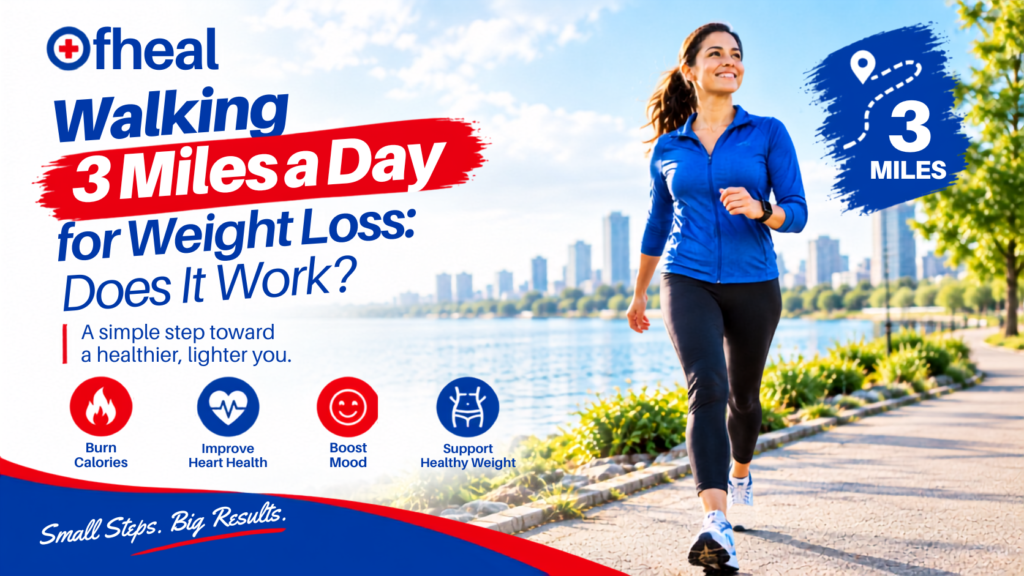
Walking 3 miles a day is a simple, low-barrier way to build a consistent fitness habit, support heart health, burn calories, and improve your day-to-day energy. For many adults, it can absolutely count as cardio when the pace is brisk enough to raise your breathing and heart rate. The real benefit comes from doing it regularly, adjusting the intensity to your fitness level, and pairing it with healthy habits you can maintain.
Is walking considered cardio?
Yes, walking is considered cardio when it is done at an intensity that makes your heart, lungs, and muscles work harder than they do at rest. If you have ever searched “is walk cardio” or “is walking cardiovascular,” the clearest answer is this: a casual stroll is movement, but brisk walking is aerobic exercise. The CDC lists brisk walking as a moderate-intensity aerobic activity, and current adult guidelines recommend at least 150 minutes of moderate-intensity physical activity each week. (cdc.gov)
Cardio, short for cardiovascular exercise, is not limited to running, cycling, rowing, or high-intensity classes. It simply means rhythmic activity that challenges your cardiovascular system long enough to improve endurance over time. Walking exercise fits that definition when you keep a purposeful pace, swing your arms naturally, and sustain the effort for more than a few minutes.
The easiest test is the “talk test.” During brisk walking, you should be able to talk in short sentences, but singing should feel difficult. If you can chat without noticing your breath, increase the pace slightly; if you cannot talk at all, slow down.
Read More: 10 Simple Ways to Reduce Everyday Stress That Work
What walking 3 miles a day adds up to
For most people, walking 3 miles a day takes roughly 45 to 60 minutes, depending on pace, stride length, terrain, and stops. At a 3 mph pace, 3 miles takes about an hour; at 4 mph, it takes about 45 minutes. That daily distance often equals about 6,000 to 7,500 steps, though your step count will vary based on height and stride.
This is where the weekly math becomes encouraging. If you walk 3 miles five days per week, you cover 15 miles; if you walk daily, you cover 21 miles. So, is walking 15 miles a week good? For many adults, yes, especially when those miles are brisk enough to count as moderate-intensity activity and are spread across the week.
Fifteen miles at a moderate pace can put many people near or above the commonly recommended 150 minutes of weekly moderate aerobic activity. The American Heart Association notes that moderate-intensity aerobic activities such as brisk walking help condition the heart to pump blood more efficiently. (heart.org)

The biggest benefits of a daily 3-mile walk
The benefits of walking 3 miles daily come from a mix of movement, consistency, and recovery-friendly intensity. It is challenging enough to improve fitness for many beginners and returning exercisers, but gentle enough that it can often be repeated without the joint stress some people feel from running.
Here are the main benefits you can reasonably expect from a consistent walking routine:
- Better heart and circulatory health: Regular aerobic activity helps train your cardiovascular system, and walking is widely recommended as an accessible way to support heart health. The American Heart Association describes walking as a simple activity that can help lower heart disease risk. (heart.org)
- Improved endurance: When you walk briskly most days, your body becomes more efficient at using oxygen and sustaining effort. A review of walking interventions found favorable changes in cardiovascular risk factors, including aerobic fitness and blood pressure, among previously inactive adults. (sciencedirect.com)
- Weight-management support: Walking burns calories without requiring gym equipment, complicated programming, or advanced skills. Mayo Clinic lists walking as a way to help manage weight while also supporting heart health and endurance. (mayoclinic.org)
- Better blood sugar control: Moderate-intensity activity helps your body use energy, and major health organizations include brisk walking among activities that support metabolic health. (cdc.gov)
- Mood and stress relief: Walking gives you a mental reset, a change of scenery, and a predictable routine. Harvard’s public health guidance connects regular physical activity with better mood, stress control, sleep, and cognitive health. (nutritionsource.hsph.harvard.edu)
- Joint-friendly movement: Walking is low impact compared with jumping or running, yet it is still weight-bearing. That combination can help many people stay active while building muscular endurance in the legs and hips.
The practical advantage is sustainability. A workout only helps if you can repeat it, and walking is one of the easiest forms of exercise to fit into normal life.
Is walking 3 miles a day good for weight loss?
Yes, walking 3 miles a day can be good for weight loss, but it works best when it helps create a consistent calorie deficit. In plain terms, weight loss happens when you use more energy than you consume over time; physical activity helps by increasing energy use, while food choices strongly influence total intake. The CDC states that using calories through physical activity combined with reducing calories from food can create the calorie deficit needed for weight loss. (cdc.gov)
Calorie burn varies widely by body size, pace, terrain, fitness level, and walking efficiency. Harvard Health’s estimates show that walking calories differ by body weight and speed, and a separate Harvard Health article uses roughly 100 calories per mile as a simple walking-or-jogging estimate. (health.harvard.edu)
For a 3-mile walk, many adults land somewhere around 200 to 400 or more calories, depending on those factors. A smaller person walking on flat ground may burn less, while a heavier person, faster walker, or someone using hills may burn more. The exact number matters less than the repeatable habit: walking 3 miles a day can add meaningful weekly activity without leaving you too exhausted to move the next day.
To make walking more effective for weight management:
- Keep the walk brisk for most of the route. A purposeful pace usually burns more energy than a slow stroll.
- Add short intervals. Try 30 to 60 seconds faster, then 1 to 2 minutes easy, repeated several times.
- Use hills when available. Inclines increase effort without requiring you to run.
- Watch the “reward snack” effect. A walk can be undone by extra calories if weight loss is the goal.
- Track trends, not one day. Body weight, energy, waist fit, pace, and consistency all provide useful feedback.
Brisk walking turns a simple walk into training
Brisk walking meaning is simple: walking at a pace that feels purposeful, raises your breathing, and can be sustained for a meaningful period. Some guidelines and research commonly use around 3 mph or faster as a practical marker for brisk walking, but perceived effort matters because people have different stride lengths and fitness levels. (stacks.cdc.gov)
A brisk 3-mile walk should feel like exercise, not like wandering through a store. Your posture is tall, your arms move naturally, your steps are quick but controlled, and your breathing is noticeably deeper. You do not need to race; you need to maintain enough effort that your body has a reason to adapt.
Use this quick form checklist:
- Look ahead, not down at your feet.
- Keep shoulders relaxed and chest open.
- Bend elbows slightly and let arms swing from the shoulders.
- Land softly, rolling from heel to toe.
- Take quicker steps instead of overstriding.
- Warm up for 5 minutes, then increase your pace.
- Slow down for the final few minutes before stopping.
Mayo Clinic recommends starting slowly to warm up and then building into your walk, which is especially helpful if you are new to regular exercise or walking early in the day. (mayoclinic.org)
Your best walking time is the one you can repeat
You may see headlines claiming that “walking at this time of day unlocks” faster fat loss, better metabolism, or superior health results. In real life, the best time to walk is usually the time you can do consistently, safely, and with enough energy to keep a brisk pace. Morning, lunchtime, and evening walks can all work.
Morning walks can help you start the day with momentum. They are useful if your schedule tends to get crowded later or if you enjoy cooler temperatures. A morning routine can also reduce decision fatigue because the walk is done before work, errands, or family responsibilities take over.
Midday walks are great for breaking up sitting time. They can refresh your focus, add daylight exposure, and make a workday feel less sedentary. If 3 miles at once is not realistic, splitting the distance into two or three shorter walks still helps you build activity into the day.
Evening walks can be relaxing and social. A walk after dinner may help you decompress, spend time with a partner or friend, and replace screen time with light movement. Choose well-lit routes, wear reflective gear when needed, and keep the pace comfortable enough that it does not interfere with sleep.
A realistic plan for walking 3 miles a day
If you already walk regularly, 3 miles may feel natural. If you are starting from a low activity level, build up gradually so your feet, calves, knees, hips, and back have time to adapt. Sudden jumps in distance can create soreness that makes consistency harder.
Try this simple progression:
- Week 1: Walk 1 mile most days at an easy pace.
- Week 2: Increase to 1.5 to 2 miles, adding a few brisk sections.
- Week 3: Walk 2 to 2.5 miles, aiming for a steady moderate effort.
- Week 4: Reach 3 miles on several days, then decide whether daily walking feels right.
- After week 4: Keep 3 miles as your baseline, and add hills or intervals only when your body feels ready.
You can also split the distance. One mile in the morning, one at lunch, and one after dinner still gives you 3 total miles. This is often the most realistic option for busy people, parents, beginners, or anyone returning after time away from exercise.
Good shoes matter more than fancy gear. Choose supportive footwear that feels comfortable during the walk, not just in the store. Bring water in hot weather, dress in visible layers, and pick routes with safe crossings and even surfaces when possible.
Walking is powerful, but it does not have to do everything
Walking 3 miles a day is an excellent foundation, but a complete fitness routine may also include strength training, mobility, and balance work. Strength exercises help maintain muscle, support joints, and make daily tasks easier. The CDC’s adult guidelines include both aerobic activity and muscle-strengthening activity as part of a well-rounded routine. (cdc.gov)
If walking is your only exercise right now, that is still a strong start. Add two short strength sessions per week when you feel ready. Bodyweight squats, wall push-ups, step-ups, hip bridges, and light resistance-band rows can complement walking without turning your routine into a complicated program.
Pay attention to pain signals. Mild muscle fatigue is normal when you increase activity, but sharp pain, worsening joint pain, chest discomfort, dizziness, or unusual shortness of breath should not be ignored. The American Heart Association advises people with foot, knee, hip, or back pain while walking to stop and check with a healthcare team to find the cause. (heart.org)
The takeaway
Walking 3 miles a day can be a genuinely effective cardio habit, especially when you walk briskly and do it consistently. It can support cardiovascular fitness, weight management, mood, endurance, and overall health while remaining approachable for many fitness levels.
The goal is not to make every walk perfect. The goal is to make walking repeatable. Start where you are, build toward a brisk pace, track your progress, and let those daily miles become a steady investment in your health.