Learn what norovirus is, how it spreads, its symptoms, and how to prevent it. Discover simple, proven steps to protect yourself and your family from the stomach bug.
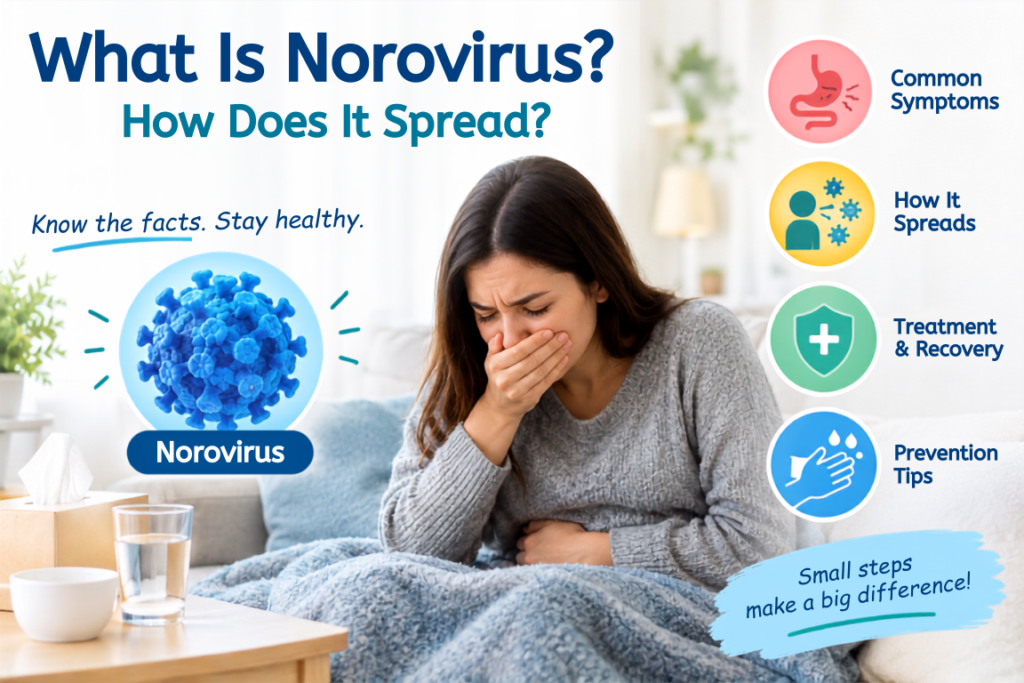
Norovirus is a very contagious virus that causes vomiting and diarrhea. It spreads through close contact with sick people, contaminated food or water, and dirty surfaces. It only takes a few virus particles to make you sick. Washing your hands with soap and water is the best way to stop it.
Ever had a stomach bug hit you out of nowhere? One minute you feel fine, and the next you’re running to the bathroom. There’s a good chance norovirus was to blame.
Norovirus is the top cause of vomiting and diarrhea in the United States. It’s also the leading cause of illness from bad food. Each year, it makes millions of people sick around the world. And it spreads fast—sometimes through a whole household in just a few days.
The good news? You can protect yourself and your family once you know how it works. This guide breaks down what norovirus is, how it spreads, and how to stop it. You’ll also learn the symptoms to watch for and what to do if you get sick.
Let’s dig in.
What Is Norovirus?
Norovirus is a group of viruses that cause your stomach and intestines to swell. This swelling is called acute gastroenteritis. It leads to sudden vomiting, diarrhea, and stomach pain.
Many people call it the “stomach bug” or the “stomach flu.” But norovirus has nothing to do with the flu. The flu is caused by a different virus and affects your nose, throat, and lungs.
Norovirus belongs to a family of viruses called Caliciviridae. There are many different types—10 groups with 48 known types in total. The most common type is called GII.4.
The first known outbreak happened in Norwalk, Ohio, back in 1968. It broke out in a school. Because of this, the first strain was named the Norwalk virus.
Here’s something tricky about norovirus. You can catch it more than once in your life. Your body may build a little protection after one infection. But that protection doesn’t cover every type, and it may not last long. That’s why so many people of all ages get sick during outbreaks.
Read More: How Long Does Norovirus Last?
Is Norovirus the Same as Stomach Flu?
Norovirus is often called the “stomach flu,” but the name is misleading. The flu is a breathing illness caused by the influenza virus. Norovirus is a stomach illness caused by a completely different virus.
The two can feel similar because both can make you feel awful. But they are not the same thing. Antibiotics won’t help either one, since antibiotics only fight bacteria.
Norovirus is also different from food poisoning, even though both can come from bad food. And it’s different from rotavirus, another stomach virus. Rotavirus mostly affects children and lasts three to eight days. Norovirus affects all ages and usually clears up in one to three days.
How Many People Get Norovirus Each Year?
Norovirus is incredibly common. Around the world, it causes about 685 million cases each year. More than 200 million of those cases are in children.
Sadly, it can be deadly too. Worldwide, norovirus leads to around 150,000 adult deaths and 50,000 child deaths each year. Most of these deaths happen in places with fewer medical resources.
In the United States, there are about 2,500 reported norovirus outbreaks every year. During the 2025–2026 season, health officials reported 1,392 outbreaks so far. That number falls within the normal range for recent years.
Cases have been on the rise in 2026. Health experts have even seen a summer surge of the virus, which is a bit unusual. Norovirus usually peaks in the colder months.
What Are the Symptoms of Norovirus?
Norovirus hits fast and hard. Most people notice their symptoms come on suddenly. The most common signs include:
- Vomiting, often sudden
- Watery diarrhea
- Nausea (feeling sick to your stomach)
- Stomach cramps or pain
Some people also get other symptoms, such as:
- A low fever
- Headache
- Body aches and tiredness
Most people feel better within one to three days. But you can still spread the virus even after you feel fine.
When Do Norovirus Symptoms Start?
Symptoms usually show up 12 to 48 hours after you come into contact with the virus. This waiting time is called the incubation period.
So you might feel great one day and be very sick the next. That fast turnaround is one reason norovirus catches people off guard.
Adults and children tend to have the same symptoms. But adults may have more diarrhea, while children may vomit more often.
What Does Dehydration From Norovirus Look Like?
The biggest risk with norovirus is dehydration. This means your body loses too much fluid from all the vomiting and diarrhea. It’s most dangerous for young children, older adults, and people who are already ill.
Watch for these signs of dehydration:
- Peeing less often or dark-colored pee
- Dry mouth and throat
- Feeling dizzy when you stand up
- Feeling weak or very tired
In children, look for extra warning signs:
- Crying with few or no tears
- Being unusually sleepy or fussy
If you or someone you care for shows these signs, take it seriously. Severe dehydration may need medical care right away.
How Does Norovirus Spread?
This is the big question. Norovirus spreads very easily and very quickly. That’s what makes it so hard to avoid during an outbreak.
Here’s how it works. When you get norovirus, your body sheds billions of tiny virus particles. You can’t see them without a microscope. And it only takes a few of those particles—fewer than 100—to make someone else sick.
You catch norovirus by getting tiny bits of an infected person’s poop or vomit into your mouth. It sounds gross, but it happens in ways you might not expect. Let’s break down the main paths.
How Does Norovirus Spread Through Food?
Food is one of the most common ways norovirus spreads. In fact, norovirus causes about half of all outbreaks from bad food in the United States. That makes it the number one cause of foodborne illness.
Norovirus can get onto your food when:
- A sick person touches food with their bare hands
- Food sits on a counter with poop or vomit particles on it
- Tiny drops of vomit spray through the air and land on food
- Food is grown with dirty water, like oysters from polluted areas
Leafy greens, fresh fruit, and shellfish are common culprits. Sick food workers are often the source in restaurants. That’s why staying home when sick is so important for anyone who handles food.
Can Norovirus Spread Through Water?
Yes, norovirus can spread through water too. Both drinking water and recreational water can carry the virus.
Water can get contaminated when:
- A septic tank leaks into a well
- A sick person vomits or poops in the water
- Water isn’t cleaned properly, like when there isn’t enough chlorine
This is why clean water and proper treatment matter so much.
Can Norovirus Spread on Surfaces?
Absolutely. Norovirus is tough and can live on surfaces for up to two weeks. It’s also hard to clean off completely.
You can pick up the virus by:
- Touching a surface a sick person touched, then touching your mouth
- Being near tiny drops of vomit that spray into the air
- Touching objects placed on a contaminated surface
Think about all the shared surfaces we touch every day. Doorknobs, phones, counters, and railings can all carry the virus. This is why norovirus spreads so fast in crowded places.
How Long Are You Contagious With Norovirus?
You are most contagious while you have symptoms, especially when vomiting. But that’s not the whole story.
You can still spread norovirus for a few days after you feel better. Studies show you can pass it on for two weeks or more after your symptoms end. The virus stays in your poop that whole time.
This is a key reason norovirus is so hard to control. People often feel fine and go back to work or school while still carrying the virus.
Where Do Norovirus Outbreaks Happen Most Often?
Norovirus loves crowded places with lots of shared surfaces. Here are the settings where outbreaks happen most:
Healthcare facilities. This is the most common setting in the U.S. More than half of all norovirus outbreaks happen in long-term care homes and hospitals. Outbreaks here can last for months.
Restaurants and catered events. Since norovirus spreads through food, restaurants are a hot spot. Infected workers can pass it to many people at once.
Schools and childcare centers. Close quarters and high-touch surfaces make schools easy targets. Some outbreaks have even shut down college campuses.
Cruise ships. Norovirus causes over 90% of diarrhea outbreaks on cruise ships. That’s why some people call it the “cruise ship virus.” But cruise ships make up only about 1% of all reported outbreaks. The virus just gets more news coverage there.
Most norovirus outbreaks happen between November and April. Still, they can pop up any time of year.
Who Is Most at Risk of Getting Norovirus?
Anyone can catch norovirus. But some people are more likely to get very sick from it.
Higher-risk groups include:
- Children younger than 5 years old
- Older adults
- People with weak immune systems
These groups face a bigger risk of severe illness and dehydration. People who eat raw shellfish, like oysters, are also at greater risk.
Your genes can play a role too. Some people are simply more likely to get sick when exposed to the virus.
How Long Does Norovirus Last and How Is It Treated?
Here’s some relief: most people recover from norovirus in just one to three days. The illness is short, even though it feels rough while it lasts.
There is no cure and no special medicine for norovirus. Antibiotics won’t help because they only fight bacteria, not viruses. So treatment is all about managing symptoms and staying comfortable.
Here’s what helps most:
- Drink plenty of liquids. This replaces the fluid you lose from vomiting and diarrhea. Drinks with electrolytes work best.
- Get lots of rest. Your body needs energy to fight the virus.
- Eat soft, bland foods. Try small bites and sips throughout the day.
Sports drinks and caffeine-free drinks can help with mild dehydration. Over-the-counter oral rehydration fluids work even better.
For severe dehydration, you may need medical care. This can include fluids given through a vein, called IV fluids. Call your doctor if you can’t keep liquids down or if symptoms last more than three days.
How Can You Prevent Norovirus From Spreading?
You can’t fully avoid norovirus, but you can lower your risk a lot. Here are the steps that work best.
Wash your hands well and often. Use soap and water for at least 20 seconds. This is the single most important step.
Stay home when you’re sick. Don’t prepare food or care for others. Wait at least 48 hours after your symptoms stop. This matters most if you work in food, schools, or care homes.
Handle food safely. Wash fruits and vegetables well. Cook shellfish to an internal temperature of at least 145°F. Keep raw oysters away from ready-to-eat food.
Clean and disinfect surfaces. After someone vomits or has diarrhea, clean up right away. Wear gloves and use a bleach solution or an EPA-approved product. Leave the bleach on the area for at least five minutes.
Wash laundry the right way. Handle dirty clothes and linens carefully, without shaking them. Wash them in hot water and dry on the highest heat.
One warning about food: norovirus can survive heat up to 145°F. Quick steaming won’t kill it. And contaminated food may look, smell, and taste completely normal.
Does Hand Sanitizer Kill Norovirus?
No, hand sanitizer does not kill norovirus well. This surprises a lot of people. Alcohol-based sanitizers just can’t destroy this tough virus.
You can use sanitizer as an extra step. But it is never a substitute for washing with soap and water. When it comes to norovirus, soap and water win every time.
Also, ignore the myths online. Activated charcoal, grape seed extract, and Coca-Cola will not prevent norovirus. Careful handwashing and cleaning are your only real defenses.
Take Simple Steps to Stay Healthy
Norovirus is common, contagious, and no fun at all. But knowing how it spreads gives you the power to protect yourself. It moves through sick people, bad food, dirty water, and shared surfaces. And it takes only a few particles to make you sick.
The best defense is simple. Wash your hands with soap and water often. Handle food safely and cook shellfish well. Clean up messes right away with bleach. And stay home when you’re sick, even after you start to feel better.
If you do catch norovirus, rest and drink plenty of fluids. Watch for signs of dehydration, especially in kids and older adults. Most people bounce back in a few days.
Want more health tips you can trust? Bookmark this guide and share it with your family. A little know-how goes a long way toward keeping everyone well.
Frequently Asked Questions
How long does norovirus last?
Most people recover from norovirus in one to three days. But you can still spread the virus for two weeks or more after you feel better.
What is the fastest way to get over norovirus?
There’s no cure, so focus on rest and fluids. Drink liquids with electrolytes, eat bland foods in small amounts, and let the virus run its course. Call a doctor if you can’t keep fluids down.
How does norovirus spread so easily?
A sick person sheds billions of virus particles. It takes fewer than 100 particles to infect someone else. The virus spreads through food, water, surfaces, and close contact, and it survives for weeks.
Can you get norovirus more than once?
Yes. There are many types of norovirus. Your body may build small protection against one type, but not all of them. So you can get sick again throughout your life.
Does hand sanitizer kill norovirus?
No. Alcohol-based hand sanitizer doesn’t work well against norovirus. Washing with soap and water for 20 seconds is the best way to protect yourself.
When should I see a doctor for norovirus?
Call your doctor if you can’t eat or drink, if you show signs of severe dehydration, or if your symptoms last longer than three days.
Is norovirus the same as the stomach flu?
People call it the “stomach flu,” but it’s not the flu at all. The flu is a breathing illness. Norovirus is a stomach virus that causes vomiting and diarrhea.